

PPO vs. HMO vs. EPO vs. POS: What's the Difference?

Updated: Sep 29
When you're shopping for health insurance, you may see a handful of 3 letter codes that seem to show up everywhere: PPO, HMO, EPO and POS. What do they actually mean?
These acronyms describe how a health plan's provider network is structured and how you access care. Understanding the difference can help you avoid choosing a plan that looks good on paper, but doesn't work well with the doctors, hospitals or specialists you want to use.
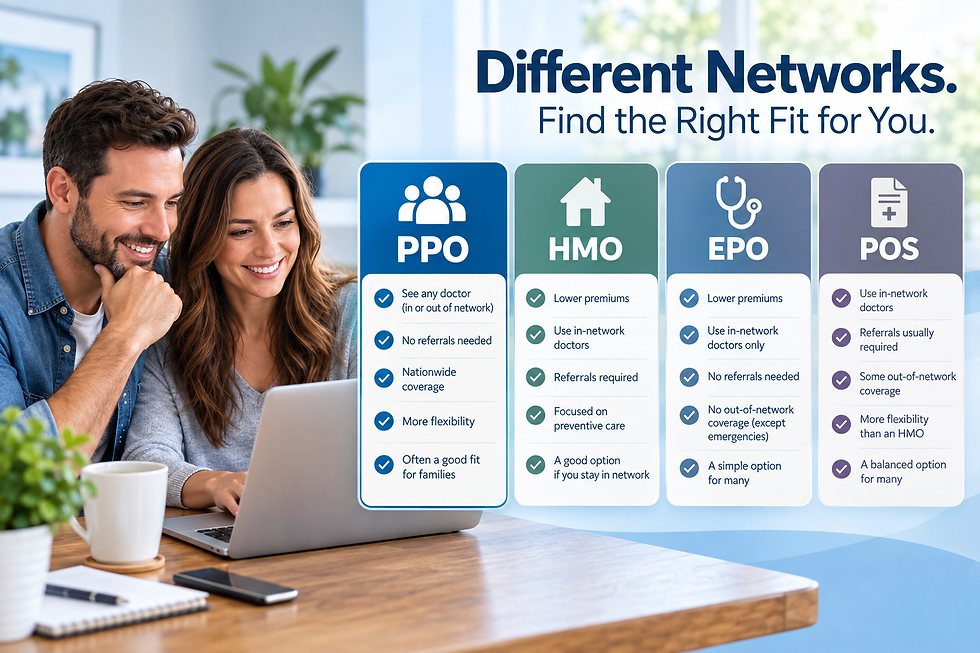
PPO: More Flexibility With Your Network
PPO stands for Preferred Provider Organization. PPO plans generally give you more flexibility when choosing healthcare providers. You typically pay less when you use providers in the plan's network, while some PPO plans also provide coverage for eligible out-of-network care at a higher cost.
Many PPO plans don't require you to choose a primary care provider or get a referral before seeing a specialist. However, the specific plan determines the actual rules. For someone who travels frequently, has doctors in different locations, or wants more flexibility, a PPO may be worth considering. Remember that a PPO doesn't guarantee every doctor or hospital is automatically covered; check the specific plan's network.
HMO: More Structured Network-Based Care
HMO stands for Health Maintenance Organization. HMO plans generally require you to use providers within the plan's network, except for certain circumstances such as emergencies.
Many HMOs use a primary care provider to coordinate your care, and referrals may be required before seeing certain specialists. They can be cheaper than PPO's, but the tradeoff is a more restricted network of available doctors and facilities. If you're comfortable staying within a particular network and following the referral process, an HMO may be a good fit.
EPO: Network-Focused Without the Referral Structure
EPO stands for Exclusive Provider Organization. An EPO generally requires you to use the plan's network for covered care, except in situations specified by the plan. Out-of-network services generally aren't covered, although emergency care can be handled differently under applicable rules.
Where EPOs can differ from many HMOs is that a referral may not be required to see a specialist. An EPO can offer some streamlined access of a PPO while keeping you within a more limited network. The important question is whether the doctors and facilities you want to use are actually in that network.
POS: A Combination of Features
POS stands for Point of Service. POS plans combine features commonly associated with HMOs and PPOs. Depending on the plan, you may have a primary care provider who coordinates your care and may need referrals for certain specialists. At the same time, the plan may provide some level of coverage for out-of-network care, generally at a higher cost.
That combination can provide flexibility, but it can also make the plan's rules more important to understand before you enroll.
So Which One Is Better?
There's no universal winner. The right plan depends on what matters most to you. When comparing PPO, HMO, EPO and POS plans, consider:
Do you want to choose your own doctors?
Are your current doctors in the network?
Do you regularly see specialists?
Are you comfortable getting referrals?
Do you travel frequently or live in more than one area?
How important is out-of-network coverage to you?
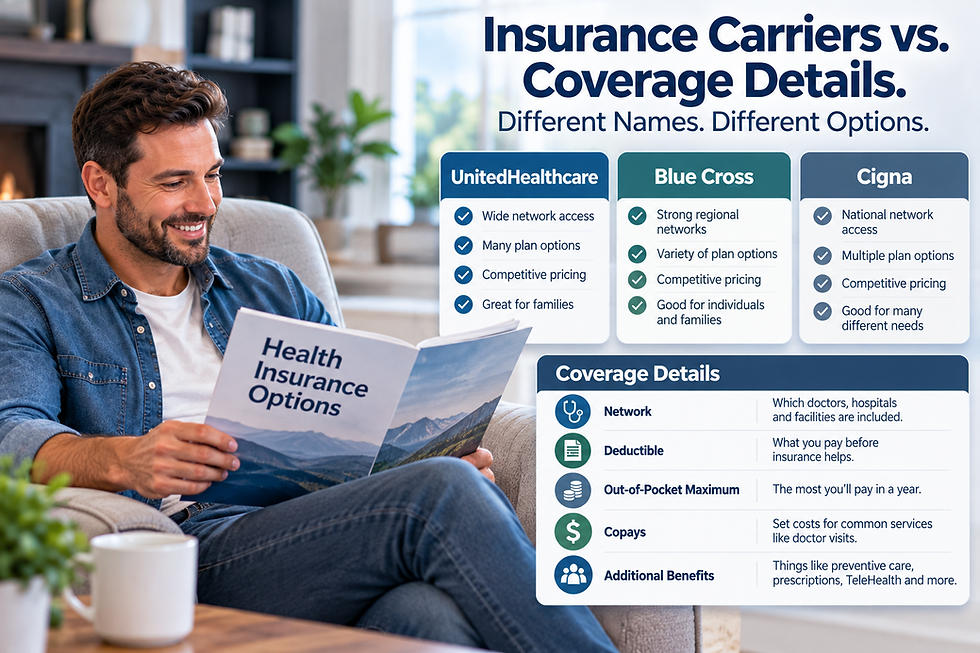
What are the deductible, copays, coinsurance and out-of-pocket maximum?
How does the monthly premium fit your budget?
A plan with a broad network isn't automatically the best choice, just as a plan with a lower premium isn't automatically the best value. It's about finding the combination of network access, cost and plan rules that makes sense for you and your family.
A Simple Example
Imagine you have a specialist you really like. Plan A is an HMO with a network that doesn't include that specialist. Plan B is a PPO that includes the specialist in its network. Even if Plan A has an attractive premium, Plan B might be worth considering because keeping your existing doctor is important to you.
On the other hand, if you don't have established doctors, rarely see specialists and are comfortable staying within a particular network, an HMO or EPO could make sense. The best plan isn't necessarily the one with the most features. It's the one that fits how you actually use healthcare.
The Bottom Line
When you see PPO, HMO, EPO or POS, don't just treat those letters as labels. They tell you something important about how the plan's network and access to care are organized.
Before choosing a plan, look beyond the monthly premium and check your doctors, hospitals, network, referrals, out-of-network options and overall cost-sharing.
If you're comparing plans for yourself or your family and aren't sure which network structure fits your situation, we're happy to help you compare the options and understand the differences before you make a decision.

Comments