

ACA Marketplace vs. Private Health Insurance: What's the Difference?

Updated: Oct 12
If you're shopping for health insurance on your own, you may come across two different routes to get insured over and over: public ACA Marketplace plans and private health plans. It can sound like you're choosing between two completely different worlds of insurance, but the distinction isn't quite that simple.
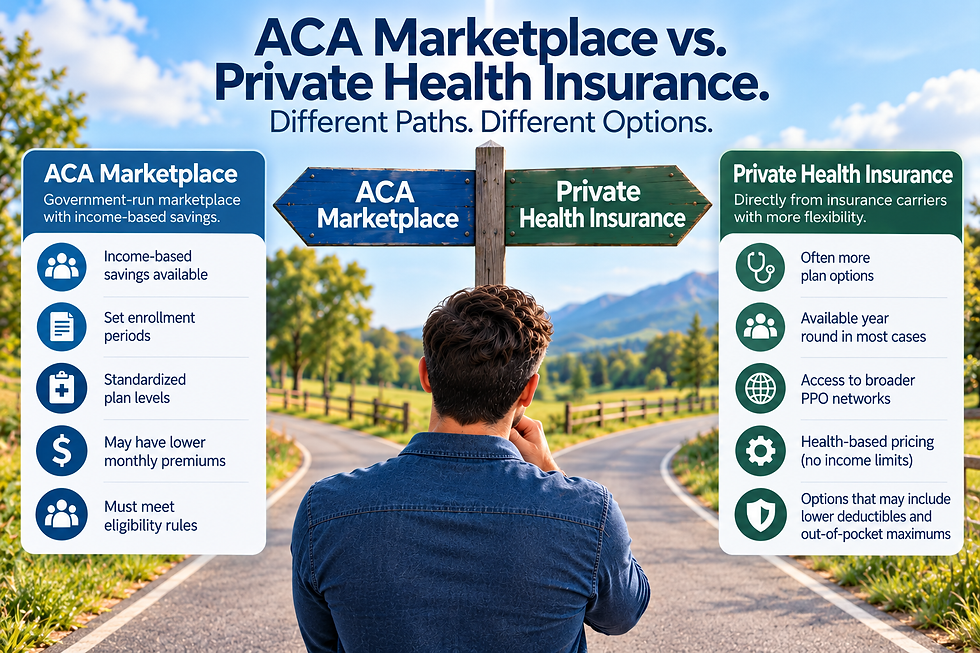
Both can provide health coverage for individuals and families. The biggest differences involve where you purchase the coverage, how the plan is structured, and what options and networks may be available to you.
What Is ACA Marketplace Insurance?
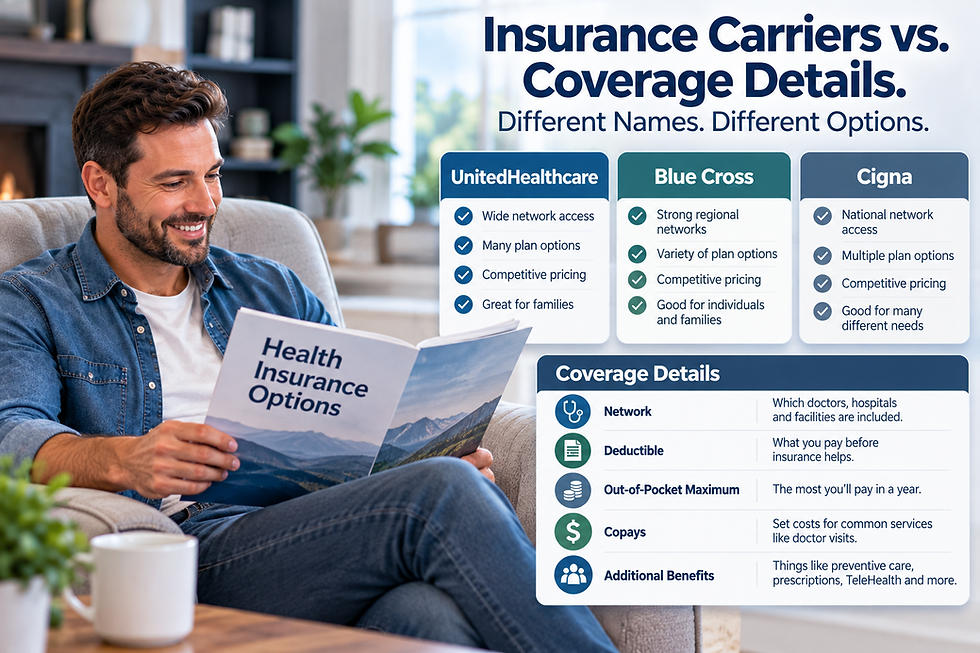
Affordable Care Act (ACA) Marketplace coverage is health insurance purchased through an ACA Marketplace, such as the federal Marketplace healthcare.gov or a state-based Marketplace. The plans are offered by private insurance carriers, such as Ambetter, BlueCross, Cigna, Oscar, or UnitedHealthcare, but they are sold through the Marketplace and follow applicable Affordable Care Act requirements.
One of the biggest advantages of ACA Marketplace plans is that they can't turn you away because of your medical history. Whether you have diabetes, heart disease, or are currently battling cancer, you're guaranteed access to coverage regardless of your health. Marketplace plans also cover pre-existing conditions, making them an especially valuable option for people with ongoing medical needs who might not qualify for certain private plans.
Another major reason people choose Marketplace coverage is the potential of qualifying for income-based subsidies that lower their monthly premiums. Depending on your household income and family size, these savings can make health insurance significantly more affordable. Just be careful when estimating your income! Your subsidy is based on your projected annual income, and if you underestimate what you earn or don't update your information when things change, you could end up having to repay some or all of those savings when you file your taxes.
What Is Private Health Insurance?
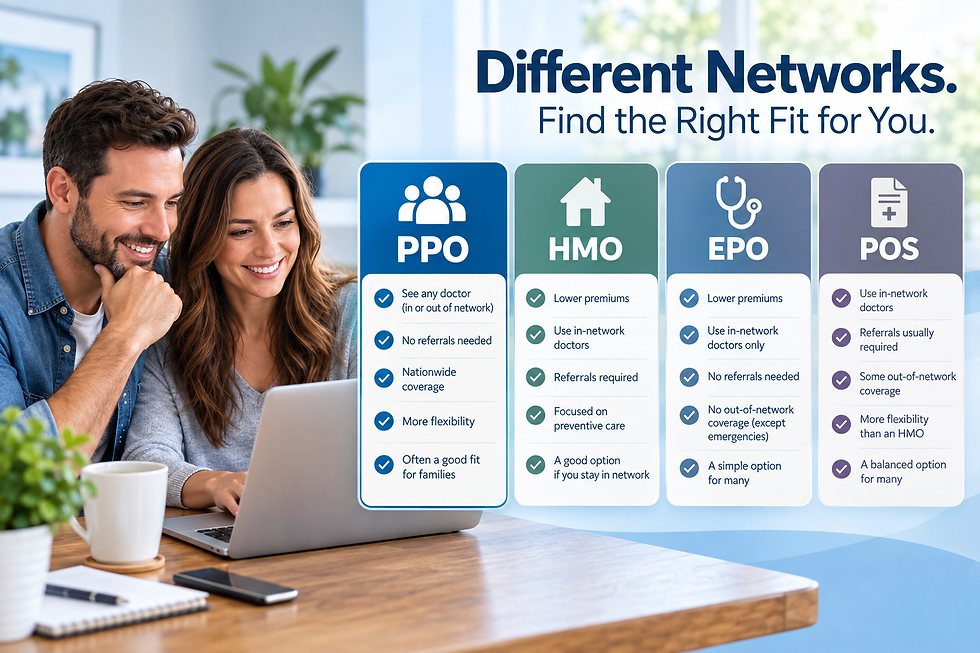
Private health insurance is coverage purchased directly from an insurance company or through an advisor, rather than through an employer or the ACA Marketplace. Some plans offer large, nationwide PPO networks, giving you more flexibility when choosing doctors and hospitals. These options can be especially appealing if you want more freedom in how and where you receive care.
Unlike ACA Marketplace plans, certain private plans consider your health when determining eligibility and pricing. Think of it like a safe driver discount on car insurance. If you're relatively healthy, you may qualify for lower premiums because your rates reflect your individual health rather than a larger pool that includes people with more expensive medical needs.
Which One Is Better?
There isn't a universal answer. The right choice depends on your circumstances, including your household situation, income, access to employer coverage, healthcare needs and the plans available to you.
Public ACA Marketplace plans do have important advantages, especially for people with pre-existing conditions or those who qualify for income-based savings. But if you're generally healthy and don't receive substantial subsidies, private coverage may offer better value.
Just remember that benefits and protections vary by plan, regardless of where and how you purchase, so it's important to compare more than just the monthly premium. When comparing options, you'll want to look at:
Deductible
Copays
Coinsurance
Out-of-pocket maximum
Provider network
Prescription coverage
The Bottom Line
Both ACA Marketplace and private health insurance have their advantages. Marketplace plans provide guaranteed coverage regardless of your health, along with potential income-based savings. Private plans, on the other hand, may offer lower premiums for healthy individuals, flexible PPO networks, and coverage options that better fit your needs.
If you're generally healthy and don't qualify for significant Marketplace subsidies, private insurance is definitely worth exploring. You may find that you can get the coverage you're looking for at a more affordable price, although it's important to compare benefits and protections alongside the cost.
You don't have to sort through all these options yourself. A licensed health insurance advisor can help you compare public and private plans, understand the differences, and find coverage that makes sense for you and your family.

Comments